5 Benefits of Going Mobile with The Church App: Making Your Content Accessible (Part 1 of 5)

TCAscripture1
TCAscripture1

Qualifying reasons abound for why your church can benefit from The Church App, but we'd like to share with you some quantitative info as well. We have been blessed to have the opportunity to build apps for some of the most influential churches and ministries out there. It's exciting to see how God is using this technology for His Kingdom and we can't help but want to share!

The most measurable and attainable benefits of using The Church App include: serving your current audience and community by making your content incredibly accessible, increasing reach and viewership, reducing costs, increasing donations, and most importantly helping people meet and grow with Jesus. Below* are real examples of these benefits from ministries that have experienced them. 1: Making Your Content Incredibly Accessible

Adding value to your current audience is so important, and making your content easily accessible is one of the best ways to do just that. It truly is all about content and quality, and churches are creating incredible Gospel centered content every single week. We’ve seen several churches that have doubled and sometimes tripled their sermon download rate via The Church App. In fact, many ministries have had just as many visitors and hits in their app as on their website. It's easier than ever for people to access church media from anywhere - without having to download individual sermons or sit at their computer.The apps we've built have had millions of downloads, countless app launches and hours spent within the apps, as well as half-a-million page views daily on our platform. Success in that area is all about pairing great content with an equally refined system for presenting it . We work diligently to assure that the content created by churches and ministries is experienced in the best way possible — especially for extended-play media. Our Advanced Audio Player  has the capacity to download for offline listening, seek, fast-forward/rewind, continues to play in the background if multitasking with other apps, and remembers where you left if your busy day causes interruptions. We’ve also invested years of hard work into creating the Subsplash Encoder. Our Encoder creates mobile-optimized videos that are of the highest-quality possible while streaming over wifi and cell networks (all while conserving battery-life and data-transfer). The Subsplash Encoder is Apple-approved and is optimized for iPhone, iPad and Android. We care about making sure churches and ministries can present their gospel-centered content with excellence in order to give their audience the best experience possible!

"The app is amazing...absolutely incredible! Any church that believes the Bible—taught well with Jesus as the hero—should attempt to do all they can to get the word out more broadly. If we love Jesus and people, we want to get his truth and love to them as cheaply, effectively, and responsibly as we can."

- Mark Driscoll, Pastor of Mars Hill Church

*This is part 1 in a 5 part series. Skip to Part 2

here

.

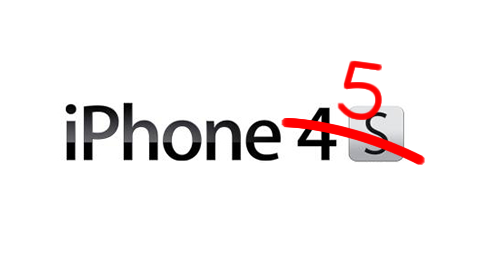
iPhone 5: You'll never be picked last in gym class again!

iPhone5Rumors2
iPhone5Rumors2

If you couldn’t tell from my slightly skewed voice on all issues Apple (unintentionally), I am an avid iPhone user. I have nothing against Android in any way, what it comes down to is that iPhone is all I’ve ever known. I can FaceTime, I had Instagram before it was cool, and of course - I’m part of the elite iOS club. I think everyone in this club can agree that we’re all waiting on the edge of our seats for a glimpse at the next iPhone - presumably iPhone 5? I have read a slew of rumors from a titanium case, to a USB port, to telepathic qualities (okay not really), to a 4 inch super screen.

So what feature would you appreciate most in the new iPhone? What’s your stance on the screen debacle? Do you think it’s just fine, or could you readily support a bigger screen? Steve Jobs will most likely be rolling over in his grave, as he decided that the current 3.5” screen was the perfect and only acceptable size for the iPhone. He even went as far as to say that some Androids look like skateboards - the guy was not only a genius but quite the joker.

Another prominent rumor is that the black gloss body will be no longer. Instead it is rumored that a titanium-type case will take its place - similar to the bodies of most Apple laptops being produced currently. This would be an incredible new option as it would make the iPhone itself sturdier and less vulnerable to drops and tumbles (which I’ve never done by the way).

The dock connector may finally be out. Although the improvement may make more sense, for the sake of convenience it is going to be a hard adopter. There are countless devices and chargers that currently use the dock connector, and if you own one of these you are going to be straight outta luck.

A welcomed addition would be an improvement in Siri. At this point, Siri is hardly a valuable feature on the iPhone. Something that could certainly improve the experience of using Siri is being able to use Siri within applications. Applications are becoming the preferred experience with mobile users and Siri is not currently able to access content from within them.

When it comes down to it, Apple knows what they’re doing. Any improvements at all will be welcomed with open arms and 24-hour groupies camping outside the Apple store. C'mon, we’re ready for a new iPhone!

Which Glasses are You Wearing? (Android or iOS)

Over the last few years, the defining question has always been: Android or iPhone? As the years have gone by, and Android has pumped out some serious competitors, this question has become harder and harder to answer. I will try to address not only what makes someone identify with one brand over another, but also what each platform has to offer in terms of user experience.

Are you a hipster? Are you a techie? Are you both? There are different personas that align themselves with different brand categories. So what qualifies someone as an Android or iOS fan? There are several defining factors that make someone loyal to one platform as opposed to another. Apple and iOS really don’t need a lot of advertising. Their products speak for themselves and make brand loyalty almost effortless. Their UX is truly the best of its kind and makes navigating fairly easy - even for new adopters. Besides the bright and shiny hardware that can almost be considered a fashion accessory, the UX on iOS devices is what drags most users in. In fact, it was actually designed to be everything a user could want. For most people, this is true, but it is also the reason iOS devices are not customizable - because what more could you want? (Turns out some people do want more - cue Android applause). iOS devices are also the most spectacular way to view and use applications. From its extensive Apple App Store, to the seamless integration on all of its devices, apps are used to the best of their ability (and most beautifully) on iOS. So what kind of person prefers iOS? It’s fairly hard to classify because Apple especially has a very wide range of users. Design-centric individuals are easily some of the most tried and true iOS fans. Let’s just say if you wear thick framed glasses and own a flannel, there’s a good chance you’re an iPhone guy.

Android has a huge product offering. They range from brilliant to (unfortunately) pretty pathetic. These phones are huge for those that are firm believers in Google services. For you Google+, Gmail, and GoogleMaps lovers, the Android is incredibly valuable. Android is also much more customizable than iOS. You can bend and tweak it to fit your personal needs in a mobile device. Android could be considered the better choice for those wanting an all-in-one tool. If you’re phone doubles as a GPS, PC, camera, organizer - you may be an Android person. It’s also a common gripe that Android is more difficult to navigate than iOS, especially for first time smartphone users. All of these qualities make it hard to qualify exactly what an avid Android user is like, because of the vast differences in their products. Android not only produces the most expensive smartphones on the market, but also the most inexpensive. This factor spans users from those who require little technical abilities in a device to those who rely heavily on their computing power. The technical side of this spectrum is where you will find your most devoted Android fans. If you've ever seriously considered building your own robot, you're probably an Android guy.

Which one would you identify yourself with?

Is Paper Obsolete?

Screen Shot 2012-05-10 at 1.20.24 PM

There’s something to be said about a hand-written letter. Then again, there’s something to be said about convenience. As technology has evolved over the last few decades there are certain practices in business that have shifted significantly. Where filing cabinets, faxes, and legal pads used to be mainstream, they have now all been replaced with PCs, smartphones, iPads and servers. Is this a good thing, bad thing, or just a necessary evil?

As our culture has evolved it seems that technology rules our life more than ever. There are so many tasks that can be completed faster and more efficiently by utilizing technology. Long gone are the days of typewriters, calligraphy, and even hand-written letters. It’s really a shame though, there are certain aspects of these things that are not easily translated through the use of technology.

There is absolutely nothing more sincere than a hand-written thank you note. To know that someone took the time out of their day to not text or email, but to actually express their gratitude in a tangible form is really something. Whenever we can, we try to take that same warmth and apply it to our products. Those same qualities that we love about the personal connection through pen and paper, can be brought into technology, but it takes focus. We don't ever want to lose that human connection through our software, but rather enhance that ability to be relational.

The core offering of our product is an outlet to present media on. Not only is the majority of content accessed through technology, but websites aren’t cutting it - mobile devices are more commonplace than ever. That's why we always try to encourage users to integrate some of the same qualities into technology. When it comes down to it, we are just a bunch of creatives, using the the outlet that we have been given. Where it may not be as utilitarian as it once was, there will always be a special place in my heart for paper and print.

There's always going to be new technology coming out that is the latest and greatest and has the ability to make a significant difference in your life. I encourage you to embrace this - but please, don’t throw away your pens. Print can be really powerful.

Quality and Content: The Keys to Church App Success

QualityandContent
QualityandContent

As mobile changes the technology industry, much like the shift caused by social networking or the dot.com bubble, entrepreneurs and people of all sorts are diving in head first to develop their own apps and make a quick $billion (thanks Instagram). Apps are clearly the popular choice, but how do you know if it’s right for you and what should you do to make sure it’s relevant?

There are many great ideas for custom apps, but it's likely not realistic for ministries to create their own custom app. As a church or non-profit, how would you go about creating an app that adds value to your mission?

There truly isn't one key ingredient to making a successful app for your organization, but there certainly are some important strategies that go into it. First and foremost, your app must serve a purpose that keeps people coming back. Let’s hope that’s an obvious conclusion. Apps such as Starbucks, Pulse, and ESPN serve as great tools that keep people engaged because they make something more convenient, are easy to use, and they just work correctly. Since those are all custom apps or highly recognizable brands, how can we learn from their successes? We’ve developed hundreds of successful apps for various organizations and have seen recurring themes that are hard to ignore. Although there are many pieces that contribute to success on the mobile front, for most organizations or groups, the two biggest contributors are quality and content. We get contacted by numerous groups every single day that are hoping to capitalize on the app explosion. Although doing some type of custom app that shoots lasers into the sky and helps you identify the location of bigfoot would be cool, it’s probably not realistic for most people to think about custom development that can easily cost hundreds of thousands of dollars. Also, you never want to create an app that serves simply as a novelty. If someone opens your app and it doesn’t make them want to use it again, it’s a waste of time and money and could even hurt your brand. I’m willing to say that there are groups out there that don’t need an app until they have a reason to engage with people through a mobile device. That's why we focus on quality and content. The app has to work right, look good, and it has to have relevant content or serve a purpose. This can be done through platform based apps. A mobile app platform is a system that one would use to manage and create their app using pre-existing feature sets and have access to a service that will take care of the code, publishing, and help keep their app up to date. It's a way to have a customized app at a fraction of the cost. Here at Subsplash, we have created the  The Church App, which enables one to very easily create their own app that is an incredible tool for engaging with people and getting content into their hands.

QUALITY: This is the single greatest factor for creating a successful app. No matter what type of app you are creating, it has to be done right. I’ve seen far too many apps that I was excited about the potential only to delete it shortly after the download. How annoying is it to download an app, open it up, and find yourself wasting precious moments of your life on a poorly thought out app. I don’t even read the app descriptions anymore because they can be greatly misleading. Instead, I automatically go look at the screenshots to make sure it is even worth interacting with. If you are making an app, do it well! Don’t cut corners or work with someone whose work you don't trust. A proper app is well thought out from concept, to design, to the development of the app itself. It should be a thing of beauty that makes life more convenient. You don’t want to settle for an app that’s pulling in feeds or has text with little design or graphics. You want to implement your own unique look and feel while making sure each feature delivers simplicity and function.

With The Church App, we have focused on how to deliver content in the best way possible on a mobile device. When we present audio in an app, we don’t just want it to be a play and pause type of feature, but rather we made it so the end user can fast forward and rewind, download for offline listening, listen in the background, use native phone controls, and the audio file remembers exactly where you left off if interrupted. Imagine how frustrating it would to listen part way into a 30 minute audio file, only to be interrupted by a call and have to go try to figure out where you left off. It’s like reading a book and forgetting to use a book mark, you can find your place again, but wouldn’t you rather have just book marked it? Quality matters greatly with apps and as soon as there is a single point of failure or frustration, your end users will likely run for the door, or in this case, the dreaded delete button.

CONTENT: Now if you have an incredibly well done app, but there’s no content, you’re up a creek. So, you have to make sure you have relevant content. It’s not considered success to have people download your app and then never use it again, you’ve got to keep them coming back. When we look at all of the apps we've created for churches and ministries, they have had tremendous success because they are constantly manufacturing amazing content that they are distributing through audio, video, and text. They are giving people a reason to use their app on a regular basis. Whether the end user is watching a sermon, reading a devotion, checking out upcoming events, following the pastor’s blog, or making a donation, it’s all made available through the app (and people are using them like crazy!). Why wouldn’t you want to make your content more accessible? We are seeing millions upon millions of launches each month on the Subsplash App platform from regular users who are accessing content from their favorite organization’s app. If you are thinking about creating an app, make sure you have the content to support it. You don’t necessarily need a bunch of stuff packed in there, and it’s certainly not a place to dump or duplicate the same content from your website, but it is a place to make your most meaningful content incredibly accessible.

We want to help see churches and ministries increase their impact through technology! So, good luck in your app adventures, but be cautious, have a game plan, and make sure you take the time to do it well!
Cookie Preferences